
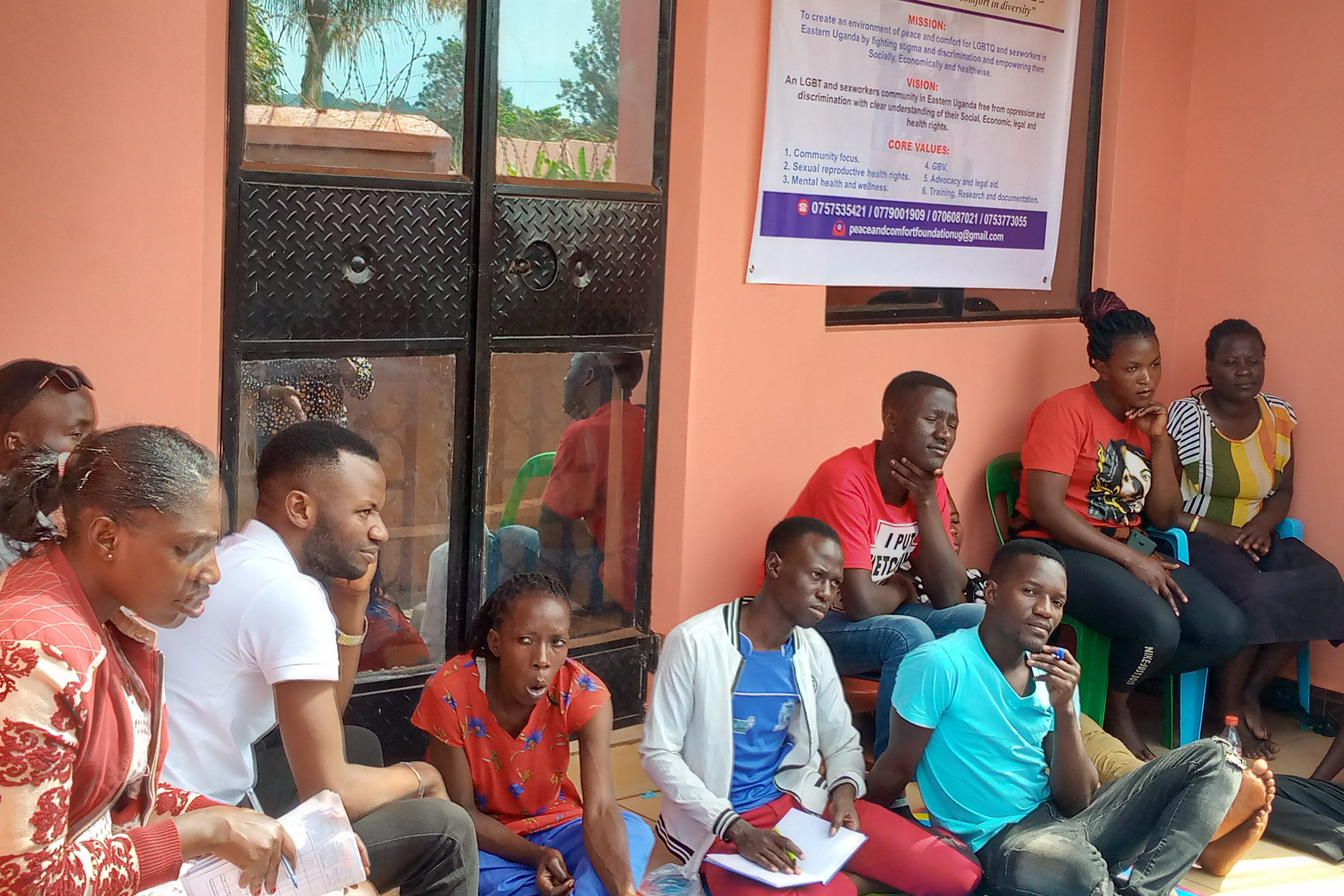
PIY works to achieve the above objectives by running the following eight (8) Programmes:
Economic Empowerment, Capacity Building, and Enhancement
Like many minorities, the vulnerable youth population in Eastern Uganda is disproportionately affected by widespread problems such as unemployment. There have been reports of transgender persons who have lost their jobs due to their self-expression. Some were expelled from school in their teenage years, while others were disowned by their families and didn’t have the means to continue with their studies. A good number of them cannot hold on to jobs due to depression, substance abuse and alcoholism. Most members survive on less than a dollar a day, while others who are homeless just survive one day at a time with no hope for a better future. Our aim as an organisation is to build the capacities of our community members by exploring avenues for their skilling, entrepreneurship training and supporting job creation so that they can overcome unemployment and escape poverty.
The capacity building program is meant to increase the capacity of our community members so they can diversify their knowledge, financial literacy, investment and business skills to increase their personal incomes as their careers take off.
Some of our community members own businesses, but they lack support to run and grow them effectively. For example, many of them need human resource skills, accounting and tax compliance and risk management training in their businesses. As part of this program, we shall help our members who own small businesses to gain more skills to help them run their businesses well. We shall also source training for members within the program who are interested in acquiring entrepreneurial skills and support to enable them start their own businesses.
Sexual Reproductive Health and Rights (SRHR)
Transgender persons and other key populations (KPs) in Uganda have unique characteristics that are not understood and have needs that are not addressed by mainstream SRHR programs targeting the general population. Whereas key populations have multiple vulnerabilities which increase their risk of exposure to HIV, STIs and unwanted pregnancies, they are exacerbated by punitive laws as well as societal stigma and discrimination PIY’s SRHR program intends to identify and eliminate the barriers to accessing quality and friendly SRH services faced by transgender persons.
The SRHR program will identify and scale up effective sensitization strategies to help our members make informed, safe choices about their sexual reproductive health so as to reduce the incidences of HIV, STIs and unwanted pregnancies. We will advocate for increased recognition of key populations in the healthcare system. We will also highlight the significant contribution KP specific SRHR information can make towards overall health targets for the entire country, to policy makers, government, local authorities, political leaders, religious leaders and all other public health stakeholders.
Mental Health and Wellness
Due to the harsh discriminatory environments and punitive laws that the transgender communities have faced, most members have suffered from depression and hopelessness. Most trans members can only imagine their futures. Most do not believe that they can make it in life because of how their past has unfolded unto them and how their own families have treated them. In order to change the dynamics, these members need to go through counseling and mental health programs.
Most of the members have turned to substance for comfort and as a coping mechanism which has led to some of them becoming addicts and alcoholics. Our counseling programs run on Tuesdays, Thursdays, and Saturdays and if need be we partner with rehab centers where we refer our members who have a substance abuse problem and need a more supportive environment.
Behavioral Change Communication
Behavioral change refers to any transformation or modification of human behavior. It may also refer to a broad range of activities and approaches which focus on the individual, community, and environmental influences on human behavior. This program is meant to reshape the mindsets of our members who wrongly believe that they are worthless to society. This program shall provide positive reaffirmation communication which will help reinforce our members’ self-esteem, dignity and sense of self-worth. They will begin to look at themselves as valid, appreciated, purpose-driven and equal contributing members of society; unlike what society labels them.
Creative Arts and Talent Development
Marginalized communities across the world, have the most creative and talented minds as has been shown in the past, producing the best designers, musicians, artists, stylists to mention but a few. Uganda is no exception. Uganda’s trans community has the best creative minds and talents but they lack a platform to fully showcase their abilities freely and openly due to societal discrimination.
With the chronic youth unemployment Uganda faces, PIY is meant to provide a platform and market for some of these talented members to build their careers and earn a decent living through their hard work. This program shall provide mentorship opportunities, industry connections and talent coaches to help develop members’ skills. It will also have a component of seeking market for these members’ products and services so that they can build sustainable livelihoods out of them.
Gender Based Violence (GBV)
“Gender,” a neutral term, has been associated with women’s issues, women empowerment programs and feminism for years, to the extent that it has been misconstrued and some people now believe that “gender” is a negative word that implies exclusion or hatred of men. On the contrary. However, “gender” refers to the socially described roles of men and women. The term “gender,” is widely used in humanitarian aid programs and its definition has evolved over time to distinguish it from “sex,” which was previously used interchangeably with it.
Gender Based Violence (GBV) is thus a phenomenon that is deeply rooted in gender inequality and continues to be one of the most notable human rights violations within Eastern Uganda. Both men and women experience GBV. However, most men never report it for fear of exposing weakness and inviting shame and ridicule. In the trans communities, domestic violence and Intimate Partner Violence (IPV) occur more often than not. Violence against sex workers from their clients is also common. However, the victims suffer in silence and cannot report the perpetrators to the authorities because homosexual relationships and sex work in Uganda are still illegal. PIY’s GBV program intends to open up candid discussions about GBV issues in minority communities, advocate for increased legal protections for victims and encourage more victims to come out, share their stories and seek justice.
Advocacy and Legal Aide
In Uganda, homosexuality is socially, religiously and legally unacceptable according to the Penal Code Law (Cap 120) Chapter XIV on Offenses against morality, which prohibits prostitution, unnatural offences and indecent practices in sections 138-148. This heightens the vulnerability of Transgender persons to arbitrary arrests, public assault and torture even in incarceration. Most of our members have been arrested at least one time in the past 5 years and without access to any legal aid this becomes a very daunting experience. PIY aims to provide legal assistance to our members who are arrested, tortured, assaulted or publicly humiliated and defamed, and help them to attain legal redress.
Training, Research, and Documentation
Due to a lack of proper documentation of trans human rights violations in Eastern Uganda, many cases of violations, discrimination and loss of life continue to be witnessed and reported without proper investigation or documentation. In most cases, no offenders have been brought to book. As PIY, we want to partner with other organizations to increase human rights training and research in order to create a unified, robust, and organised system for documenting human rights violations against transgender persons in Eastern Uganda. This will help us conduct evidence-based advocacy, programming and mobilization of national and international allies in the fight for respect of minority rights, freedoms and equality.
 Pathways Initiative for Youth Empowerment